
What Probate Covers in Gladwin County
The 17th Probate Court handles wills, estates, trusts, guardianships, conservatorships, and treatment orders for people who are mentally ill or developmentally disabled. These are the cases that decide how an estate is divided and who is appointed to protect a vulnerable person. Michigan has 78 probate courts, and probate judges are elected to six-year terms. In a county this size, that one court carries every estate and guardianship matter for the whole community.
The court sits in the Cedar Avenue courthouse alongside the district and circuit courts. Because probate is a separate court, its files are not part of the circuit record set, and its judges hear a narrow but important slice of county cases. Estates and guardianships make up the bulk of the docket.
The court's reach goes beyond wills and estates. It handles protective proceedings for adults and minors who need a guardian or conservator, and it enters treatment orders for people who are mentally ill or developmentally disabled. Probate courts also take on certain civil and miscellaneous matters that state law assigns to them. That mix is why a probate file can range from a simple estate to a sensitive medical case within the same courthouse.
Gladwin County Probate Terms Defined
Probate filings use a handful of terms that trip up first-time filers. A short glossary makes the forms and hearing notices easier to follow.
- Testator
- The person who made the will.
- Executor
- The person named in a will to carry out its terms and settle the estate.
- Intestate
- Dying without a valid will, so state law decides who inherits.
- Guardianship
- A court appointment giving one person authority over the care of another who cannot decide for themselves.
- Conservatorship
- A court appointment to manage the money and property of a protected person.
How to Search Gladwin County Probate Court Records
Probate cases may appear in the statewide MiCOURT case search, which lists probate as one of its case categories. The county does not publish a separate probate search portal, so many files are requested through the court in person or by phone. The court also links its forms and self-help tools on its county page.
Because there is no dedicated probate portal, the phone and the courthouse counter do much of the work. A caller can confirm whether a case exists, ask what is open to the public, and learn which form to file. For a sensitive matter such as a guardianship or a mental health case, the court will explain what a member of the public can and cannot see before a copy is released. Starting with a phone call sets the right expectation for the visit.
- Check the statewide MiCOURT case search for a probate case by name.
- Call the 17th Probate Court to confirm a file and ask what is public.
- Request copies from the court, with a photo ID for any limited file.
Michigan keeps the standard probate forms on its state court forms site. You can review the state's Michigan court forms for the probate petitions and account forms the court uses.
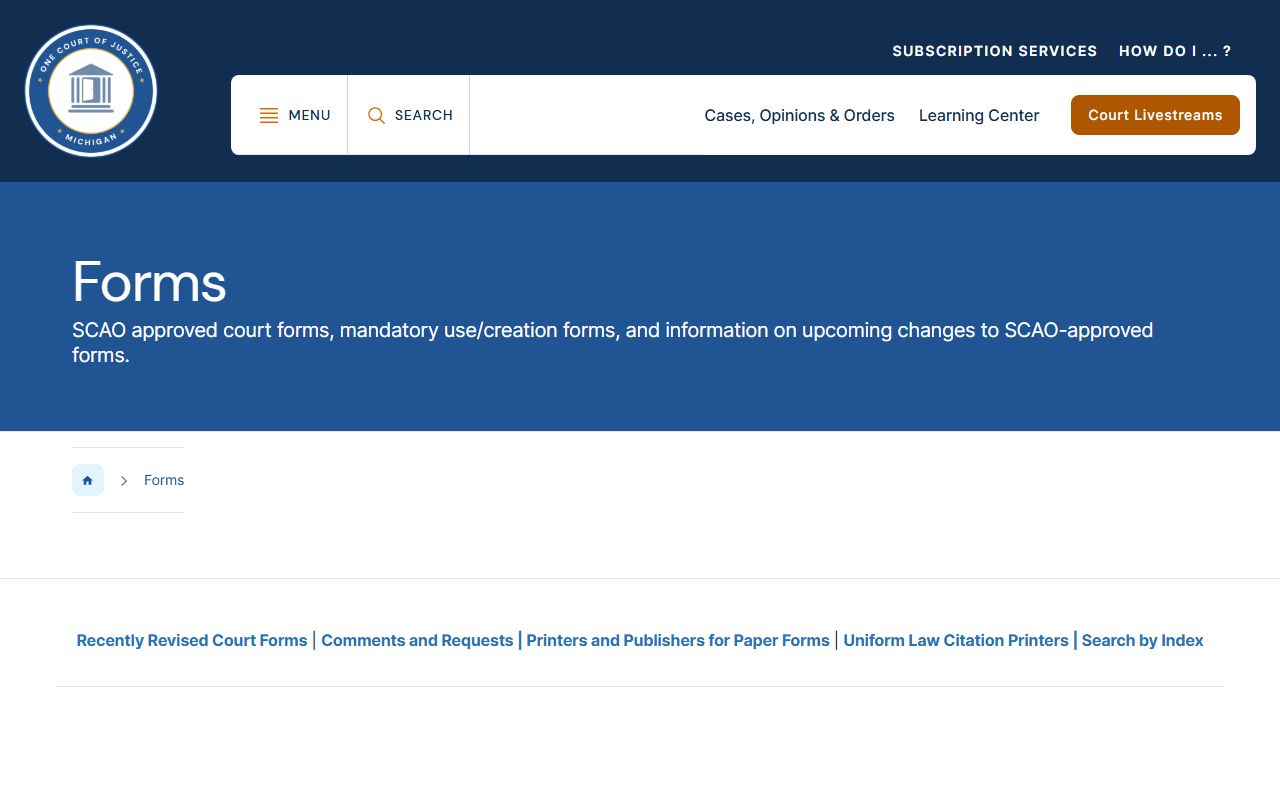
Those state forms match the guardian reports, notices of hearing, and account petitions the county probate court lists on its own page.
Gladwin County Probate Forms and Self-Help
The probate court page gathers the forms a fiduciary or family member is most likely to need. It also links self-help tools for people who are handling a case without a lawyer, which is common in smaller estates and guardianships.
- Annual report of guardian forms for ongoing guardianship cases.
- Proof of service and notice of hearing forms.
- Petition to allow accounts and fiduciary account forms.
- Order allowing accounts once the court reviews a filing.
- Court filing fees and a handbook of legal terms.
Alongside the forms, the court page points to Michigan Legal Help, the Michigan Courts Self-Help Center, and a State Bar of Michigan legal-aid link. Those resources explain the steps a case takes and help a filer avoid a rejected form. The county keeps this material on the same page as its contact and accessibility details.
The 17th Probate Court in Gladwin County
Gladwin County has one probate court, the 17th Probate Court. It follows the county courthouse schedule and names an ADA coordinator for accessibility requests. Probate judges in Michigan are elected to six-year terms, and the state has 78 probate courts in total. The contact card below is the direct route for probate questions and file requests, and the ADA coordinator is the contact for anyone who needs an accommodation to take part in a case.
17th Probate Court
ADA Coordinator: Kristie Simrau
401 W Cedar Ave
Gladwin, MI 48624
989.426.7451
Mon to Fri, 8:30 a.m. to 4:30 p.m.
Gladwin County Probate Filing Fees
Michigan sets many probate fees by statute, and the county links a court filing fee schedule on the probate page. Because the specific amounts are set by the court and state law rather than a flat local rate, confirm the current figure with the court before you file. Some estate fees also depend on the value of the estate, so two cases can carry different costs. The table shows the common filings and where the amount comes from.
| Item | Amount |
|---|---|
| Estate or probate application | Set by Michigan statute |
| Letters of authority | Per court fee schedule |
| Guardianship or conservatorship petition | Set by Michigan statute |
| Certified copy | Court-rule copy fee, confirm with court |
What Gladwin County Probate Records Show
A probate file tracks an estate or a protective case from opening to close. Estate files hold the will, the inventory of assets, the accountings that show money in and out, and the orders that approve distributions. Guardianship and conservatorship files hold petitions, annual reports, and the orders that grant or end authority. Trust matters add their own filings when a trust is administered under court supervision.
Reading a probate file is easier once the roles are clear. The testator is the person who wrote the will, the executor or personal representative carries it out, and the court signs off on the accountings before assets are distributed. In a guardianship, the annual report shows how the guardian has cared for the protected person over the past year. Each of these documents becomes part of the case record the court keeps.
Probate decisions can be appealed. In Michigan, an appeal from the probate court goes to the Michigan Court of Appeals, the state's intermediate appellate court, which is divided into election districts across the state.
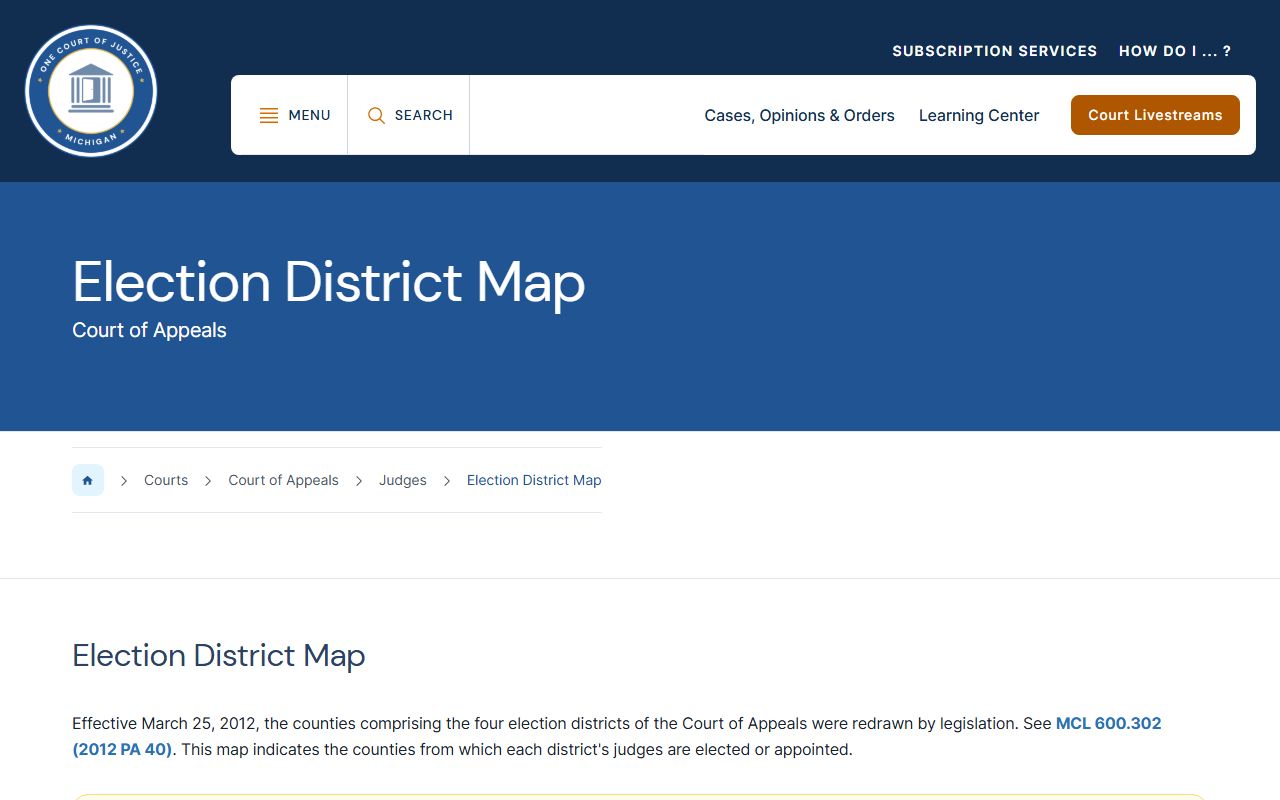
That state appeal path keeps probate appeals inside Michigan's court system rather than moving them to a different level of government.
Restricted Gladwin County Probate Records
Not every probate file is fully open. Guardianship, conservatorship, and mental health matters can carry confidentiality limits because they involve protected people and sensitive medical detail. Trial court access rules control what the public can see, and a judge can limit a file where the law allows.
The court rule on trial court records sets the default that files are public except where a statute, rule, or order says otherwise. It also protects certain personal details, such as dates of birth, Social Security numbers, and financial account numbers, even inside an otherwise public file. A person who wants to see a sealed or limited record generally has to show the court a good reason, and the judge decides whether access is allowed.
Probate is a state matter, so a federal court is not part of the county probate system. Federal appeals for Michigan run through the Sixth Circuit, a separate track that does not hold county estate or guardianship files.
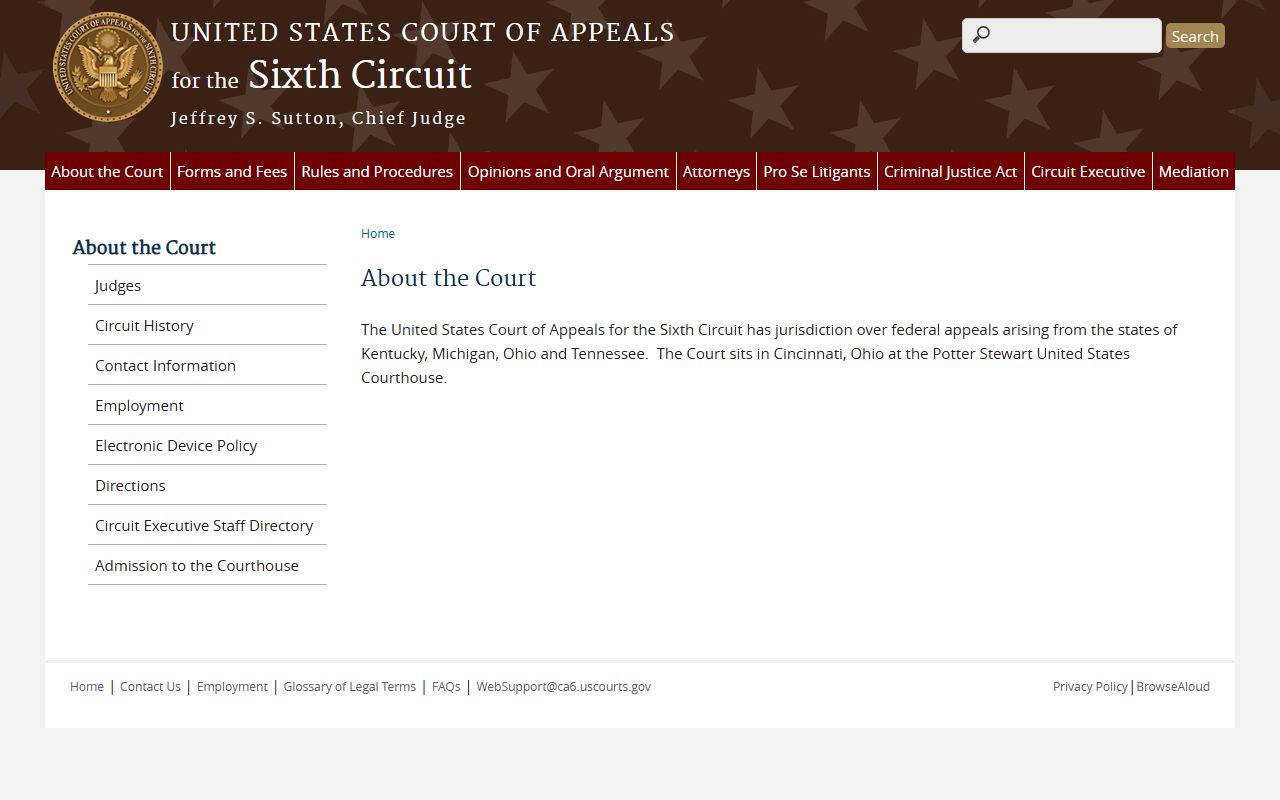
For copies of a circuit or family file that sits outside probate, the request runs through the Gladwin County Clerk instead of the probate court.